Nel settore dell’ingegneria strutturale si è alla continua ricerca di materiali che presentino basse densità ed al contempo buona resistenza, buona rigidezza, buon comportamento all'abrasione ed all'impatto e che non siano facilmente soggetti a fenomeni di corrosione. La conoscenza delle caratteristiche meccaniche e fisiche di un materiale è il primo passo per una corretta valutazione delle prestazioni in esercizio del componente.
Nelle attività di ricerca e sviluppo sono frequentemente richieste attrezzature/accessori per l’esecuzione di prove sperimentali che non costituiscano il corredo standard delle macchine di prova.
Le attrezzature standard commercializzate, in accordo con le normative UNI, EN, ISO, ASTM, DIN, BS, AF, sono realizzate in acciaio al carbonio, in acciaio inossidabile o in leghe metalliche (leghe di nichel) in modo da conferire al prodotto elevate prestazioni, anche a temperature elevate e minimizzare effetti indesiderati quali corrosione e ossidazione nelle normali condizioni ambientali di laboratorio.
BOND TESTS
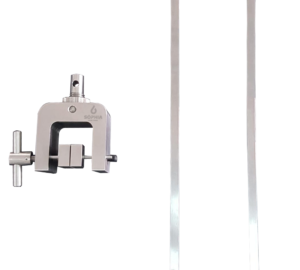
COMPRESSION LOADING
This test method indicates the compression properties of strength and stiffness of composite materials with polymer matrix by means of a combined compression load. This type of testing can be applied to general composites that are balanced and symmetric. The specimen may be untabbed (Procedure A) or tabbed (Procedure B), as required. One of the basic rules is that the…
The fixture is used for testing composite materials under uniaxial compression. The flat piece is a load plate made of hardened steel, to be interposed between the upper protrusion of the specimen and the load floor of the test machine, to protect the load plate. There is actually no ASTM standard governing the Modified D 695 Compression Test Method. ASTM…
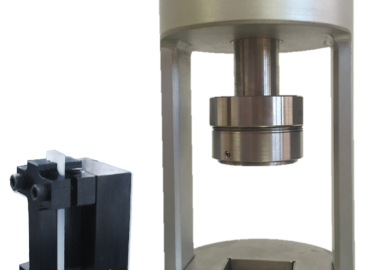
FASTENER RELATED TESTS
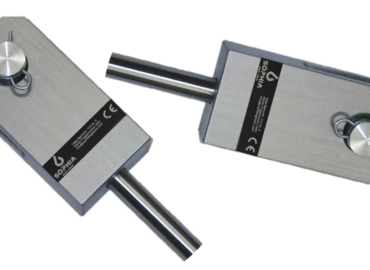
ASTM Standard D 5961 includes four distinct laminate bearing test methods, identified as Procedures A, B, C, and D. Procedure B is actually a specimen support fixture. The other three procedures, as will be described here, are pin bearing fixtures. PROCEDURE A: DOUBLE-SHEAR TENSILE LOADING Procedure A in ASTM D 5961, has the objective to test composite laminates double-edged.…
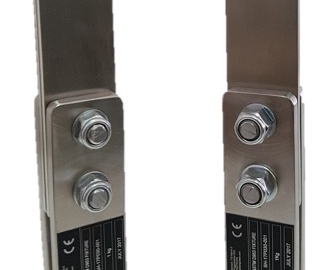
This procedure is used for determining the bearing capacity of rigid plastic or in the form of sheets, printed form, or in the form thermoset pultruded. There are two procedures. Procedure A is applicable for the load voltage and Procedure B for the compression load. This tests for plastic materials is intended to be applied in the specification of the…
This test method is used for pull-through strength, i.e., the strength of the plates the fastener is holding together. The test specimen consists of two 1.5” square plates connected at their centers by the desired fastener being tested. To maintain proper rotational alignment of the two halves of the fixture there are two pins and indexing holes. When a compressive…
The bearing strength of a 1.5” wide test specimen assembly containing one or two ¼” diameter fasteners is to be determined.
FLEXURAL LOADING
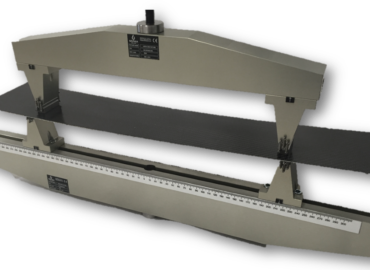
This test method covers the determination of the properties of flat sandwich constructions subjected to flatwise flexure in which the applied moments cause curvature of the sandwich facing planes. These tests may be conducted to determine the sandwich flexural stiffness, the core shear strength and shear modulus, or the facings compressive and tensile strengths. Tests to evaluate core shear strength…
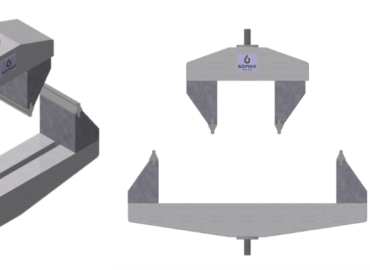
This test method determines the flexural properties (including strength, stiffness, and load/deflection behavior) of polymer matrix composite materials under the conditions defined. Procedure A is used for three-point loading and Procedure B is used for four-point loading. Procedure A—A three-point loading system utilizing center loading on a simply supported beam. Procedure B—A four-point loading system utilizing two load points equally…
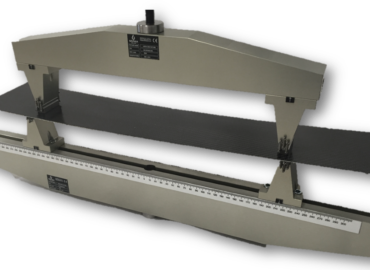
This is a specialized version of the standard Long Beam Flexure Fixture and includes linear bearings alignment rods. It does not have an adjustable structure, as it has been designed for specific load and support spans. In test environments such as the control of production quality, sometimes this is desired to ensure that the appropriate bays are constantly used and…
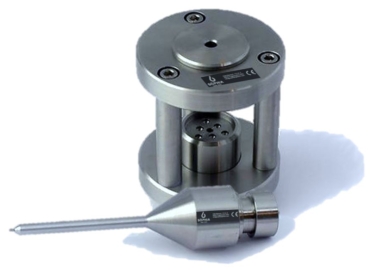
A ring supports thin circular disks of a monolithic ceramic material, or a whisker- or particle-reinforced ceramic matrix composite. These disks are loaded by a smaller diameter concentric ring, a so-called ring-on-ring loading. Thickness and material of the sample determine the required diameter of the support and loading ring. The specimen surfaces must be very flat , or a relatively…
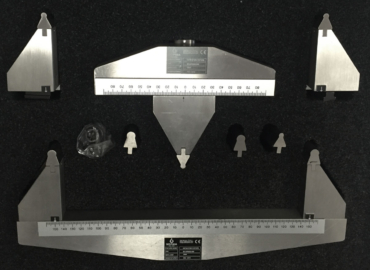
ASTM D790 are used for determining the flexural properties of unreinforced and reinforced plastics, including high modulus composites and electrical insulating materials utilizing a three-point loading system to apply a load to a simply supported beam (specimen). ASTM D790 can generally be applied to both rigid and semi-rigid materials, but it is not possible to determine the flexural strength for…
FRACTURE TOUGHNESS TESTS
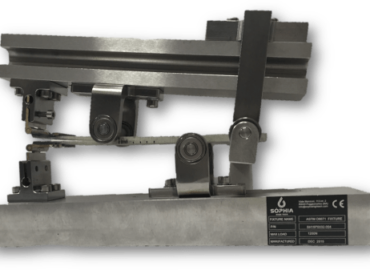
This test apparatus is useful to determine the opening Mode I interlaminar fracture toughness, GIc, of continuous fiber-reinforced composite materials by the double cantilever beam specimen. This test application is employable with composites consisting of unidirectional carbon fiber and glass fiber tape laminates with brittle and tough single-phase polymer matrices. Delamination phenomenon constitutes a strong weakness of many advanced laminated…
RUBBER TESTS
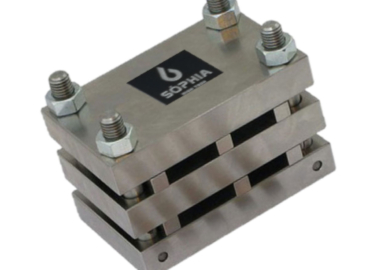
This test methods is useful for the test of rubber that should be used in applications in which the rubber will be subjected to compressive stresses in air or liquid media. For example in machinery mountings, vibration dampers, and seals. Two test methods are provided and covered in the standard : Method A – Compression Set under Constant Force; Method…
SHEAR LOADING
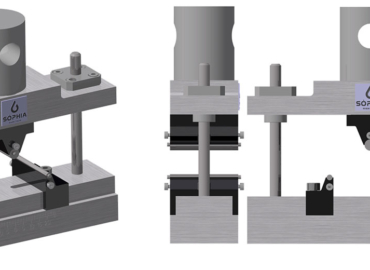
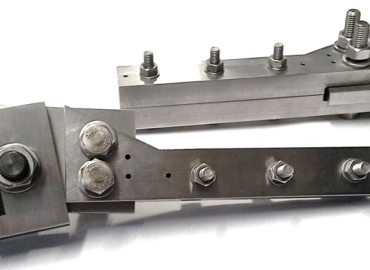
This test method indicates the cutting properties in the plane of a high modulus fiber-reinforced composite materials by two procedures. As regards the procedure A, laminates stuck between two pairs of loading rails are tested. When the tension load is applied to the rails, shear forces arise in the specimen. In procedure B, laminates clamped on opposite edges with a…
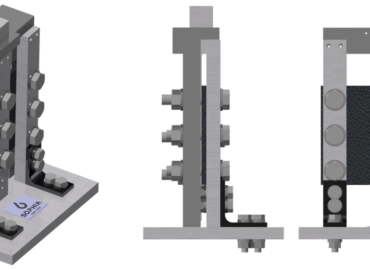
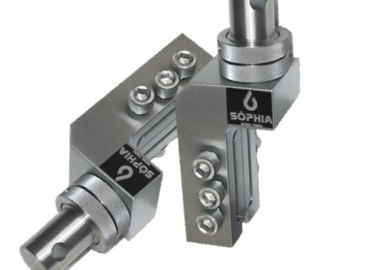
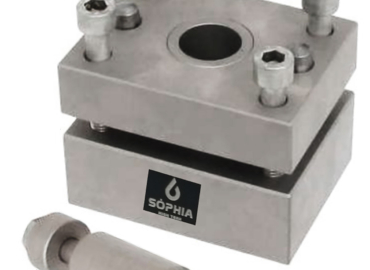
ASTM D 732, defines a punch-type of shear test. This test method covers the procedure for determining the shear strength of composite materials in the form of sheets, plates, and molded shapes. The thicknesses of specimen can range from 0.050” to 0.500”. A disc from 1” diameter will be drilled by the specimen using a specific equipment. The specimen to be used…
SPECIALTY COMPRESSION TEST FIXTURES
Knowledge of the damage resistance and damage tolerance properties of a laminated composite plate is useful for product development and material selection. The residual resistance data obtained by this test method will be used in the specification of materials and research and development. The properties obtained using this method will provide a guide about the capacity for tolerance to the…
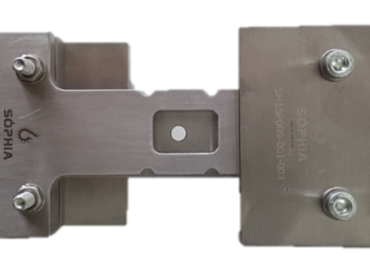
This test method is designed to produce notched compressive strength data for structural design allowables, material specifications, research and development, and quality assurance. Factors that influence the notched compressive strength and shall therefore be reported include the following: material, methods of material fabrication, accuracy of lay-up, laminate stacking sequence and overall thickness, specimen geometry, (including hole diameter, diameter-to-thickness ratio, and…
The untabbed sample is 3 “long, 1” wide, and the thickness can vary depending on the material and layup in the testing phase. Northrop Specification recommended thicknesses from 0.125 “to 0.250”. The standard sample contains a central “diameter hole 0.25, even if the unit has proved effective, even for compression of specimens without holes, if end crushing does not occur.…
This common method in aerospace concerns compression tests on plates, rolled experimentation multidirectionaldetermination of the post-impact compressive strength. The methodis also useful for the compression tests after impact on composite materials, the company has acquired a new realization of controlled impact machine. The impact receiving sample is placed in the test assembly and after the application of the load of…
This type of NASA compression after impact (CAI) of compression of the test device is an alternative to the more popular Boeing compression after the compression of the device of the impact test. The NASA devices are 10 ” long and 5″ in width. As in Boeing method, a quasi-isotropic laminate is typically tested. The NASA device version includes four…
SPECIALTY TENSILE TESTS
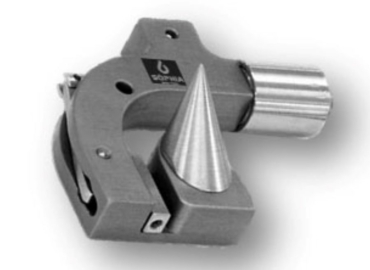
These test methods cover the tensile testing of aramid threads, twisted cables from these yarns and fabrics from these cables. The yarn or cord can be wound on cones, tubes, coils, chokes, or beams; It can be woven into fabric; or they can be realized in some other form. The methods include test procedures and include no specifications or tolerances.…
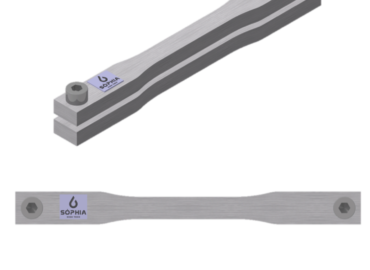
Tensile tests measure the force required to break a plastic sample specimen and the extent to which the specimen stretches or elongates to that breaking point. ASTM D-638 tensile test procedure: Specimens are placed in the grips of the universal tester at a specified grip separation and pulled until failure. For ASTM D 638 the test speed is determined by…
Upper and lower bonding blocks of the equipment are realized each with a double yoke arrangement. This conformation is made in order to allow full alignment of the sample during tensile load. On the testing machine there is an attachment standard 1.25″ diameter male studs with 0.50″ diameter cross-pin holes. The bonding blocks have 1″ square ends. The life of…
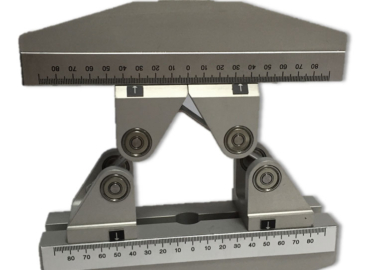
This fixture is useful to indicate the curved beam strength of a continuous fiber – reinforced composite material. For the test run it is necessary to use a curved beam sample 90 ° that has to be positioned for the four-point-bending test apparatus in order to be loaded. The curved beam is composed of two straight legs joined by a…
SPECIMEN FABBRICATION AIDS
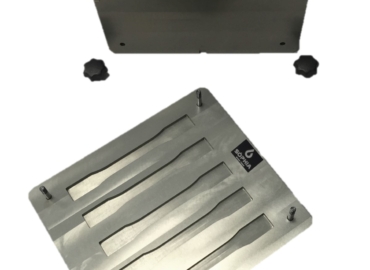
The fixture was designed in relation to the test method expressed in ASTM D638 designation. This method has been realized to produce tensile properties data for the control and specification of the plastic materials. The collection of these data is useful for the qualitative characterization and for research and development. This test method is used for the determination of the tensile…
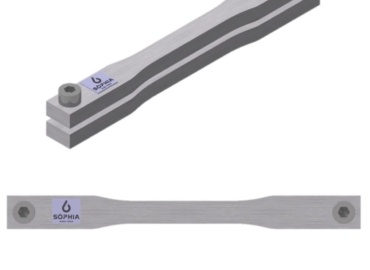
ASTM D638 tensile tests measure the force required to break a plastic sample specimen and the extent to which the specimen stretches or elongates to that breaking point. Tensile test procedure: Specimens are placed in the grips of the universal tester at a specified grip separation and pulled until failure. For this fixture the test speed is determined by the…
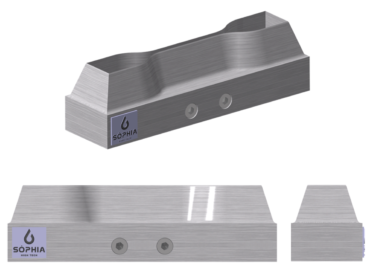
BS EN 455-2 describes the testing requirements for determination of physical properties, including break strength, before and after accelerated aging, of medical gloves for single use, surgical gloves, examination/procedure gloves, long-cuff medical gloves, and seemed/welded gloves. For this test, we recommend either pneumatic grips side acting grips or mechanical elastomeric grips (manufactured by Sòphia). Pneumatic grips have the advantage because…
To characterize the mechanical properties of the polymer to be used as the matrix material in a new composite material system it is often necessary. Thermoset polymer specimens can often be cast to finish dimensions in open molds.
TENSILE LOADING
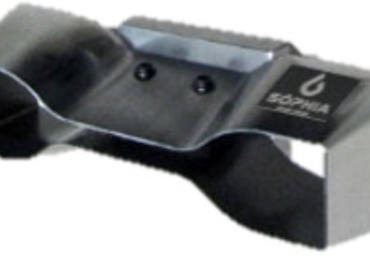
This method covers the effect of the application of a tension load to vulcanized rubber and similar rubber-like material at room temperature and elevate temperature. Covered are tests for tensile stress, tensile strength, ultimate elongation and set. The method is not applicable to the testing of material ordinarily classified as ebonite or hard rubber. Test Standard ASTM D 418 /…
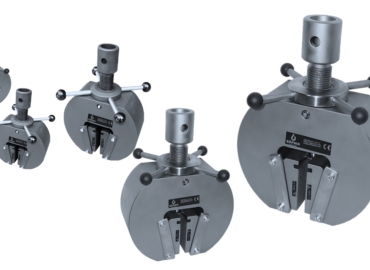
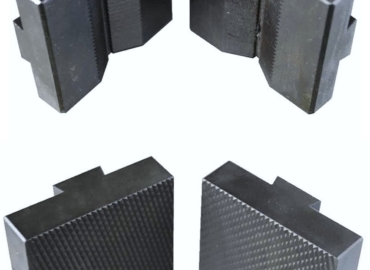
Wedge grip inserts of all types, in all sizes and load capacities to fit all existing wedge grip bodies, can be provided, including custom designs for special applications. While machined serration grip faces, either straight- or cross-serrated, are very popular, grip faces covered with tungsten carbide particles are also being used more extensively.
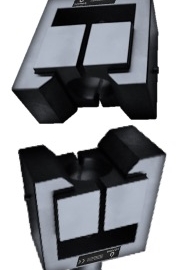
Foam tests and foam testers provide a standard method of obtaining data for research and development, quality control, acceptance or rejection under specifications, and special purposes. Type A specimens are used when enough sample material exists to form the necessary specimen. Type B is preferred when smaller specimens are available, such as in sandwich panels, etc.
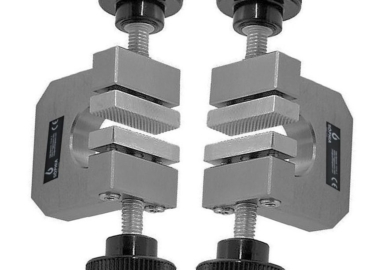
In general, the thin sheet to be tested, plastic or metal film or sheeting up to 0.040 “in thickness, is held by the line of contact at each end between the flat reinforcing plates and the eccentric rolls. To facilitate the installation of the specimen cylinders have a lever arm and are spring loaded. The eccentric cam action of the…
To tensile test cordage, rope, flat strapping and similar flexible materials that might be otherwise difficult to grip without creating undesirable stress concentrations and premature failures, typically are used split capstan grips. Depending on your needs, it is possible to configure the capstan grips. To hold the sample, capstan grips taken anchors exploit friction. The end of the sample is…
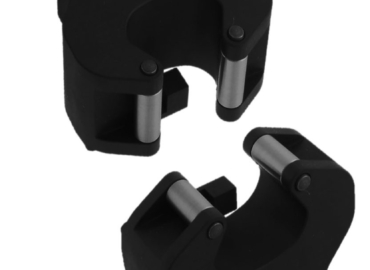
The equipment is composed of lower and upper handles, which are equal. Its purpose is to determine the resistance to traction of briquettes special form of mortar, mortar and other similar materials of monolithic lining. The stop plates on the grips center the specimen fore and aft. Through the rollers at the ends of the handles, the sample is loaded…
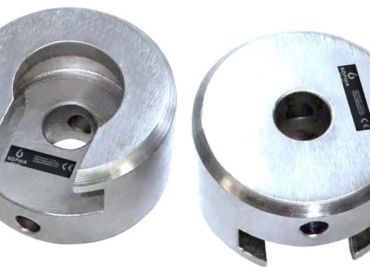
To help maintain the axial alignment load, usually universal joints are used in traction load applications. Can be designed and manufactured universal joints of all the final attack configurations and the load capacity. Usually, the material chosen for the realization of joints is 17-4 PH stainless steel, with pins made of hardened stainless steel pins 440C.
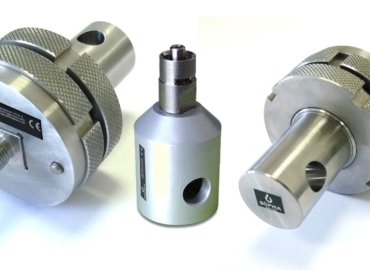
Locking rings, adapters, and brooches of any configuration, to adapt specific test equipment to every type of mechanical or servo-hydraulic test machine. Every sistem can be customized according to Customer needs.